Working papers
-
Who Sets the Price? The Vertical Origins of Uniform Pricing
We show that the systematic component of retail price-setting originates primarily upstream with manufacturers, and that AI adoption reduces the upstream information frictions behind uniform pricing.
Abstract. Retail prices in U.S. consumer markets are jointly produced by manufacturers and retailers, but we show that the systematic component of price-setting originates primarily upstream. Using manufacturer-product scanner data spanning approximately 5 billion UPC-store-month observations, we decompose retail price variation into manufacturer and retailer components. Manufacturer identity accounts for approximately 90 percent of explained variation in price levels and 97 percent in price changes. Price dispersion is shaped by both layers of the chain, though manufacturers remain the largest source of explained variation. We show that pricing practices change after brand acquisitions: acquired UPCs converge toward the acquirer's incumbent pricing behavior when the acquirer already operates in the target's category, but diverge from the acquirer's broader pricing behavior in expansionary acquisitions. Private-label products, which compress the manufacturer-retailer information wedge, exhibit greater geographic dispersion and responsiveness to local conditions than national brands. Finally, consistent with a reduction in upstream information frictions, products sold by more AI-exposed manufacturers exhibit greater geographic dispersion, more frequent repricing, and lower prices after the introduction of scalable generative AI APIs, with stronger responsiveness to local conditions. The results indicate that retail pricing rigidities reflect upstream informational frictions that technology can relax, rather than immutable features of retail markets.
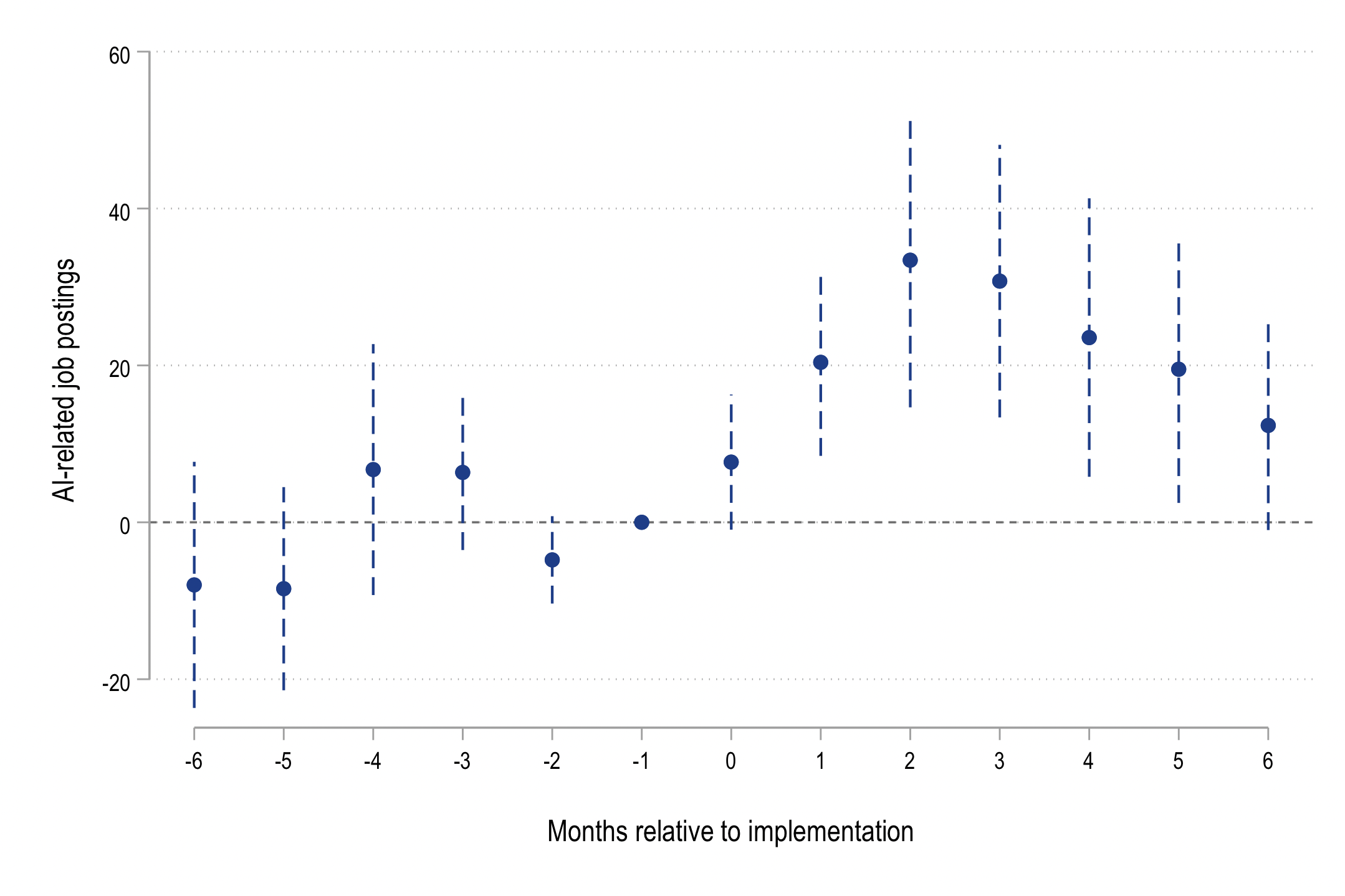
AI adoption 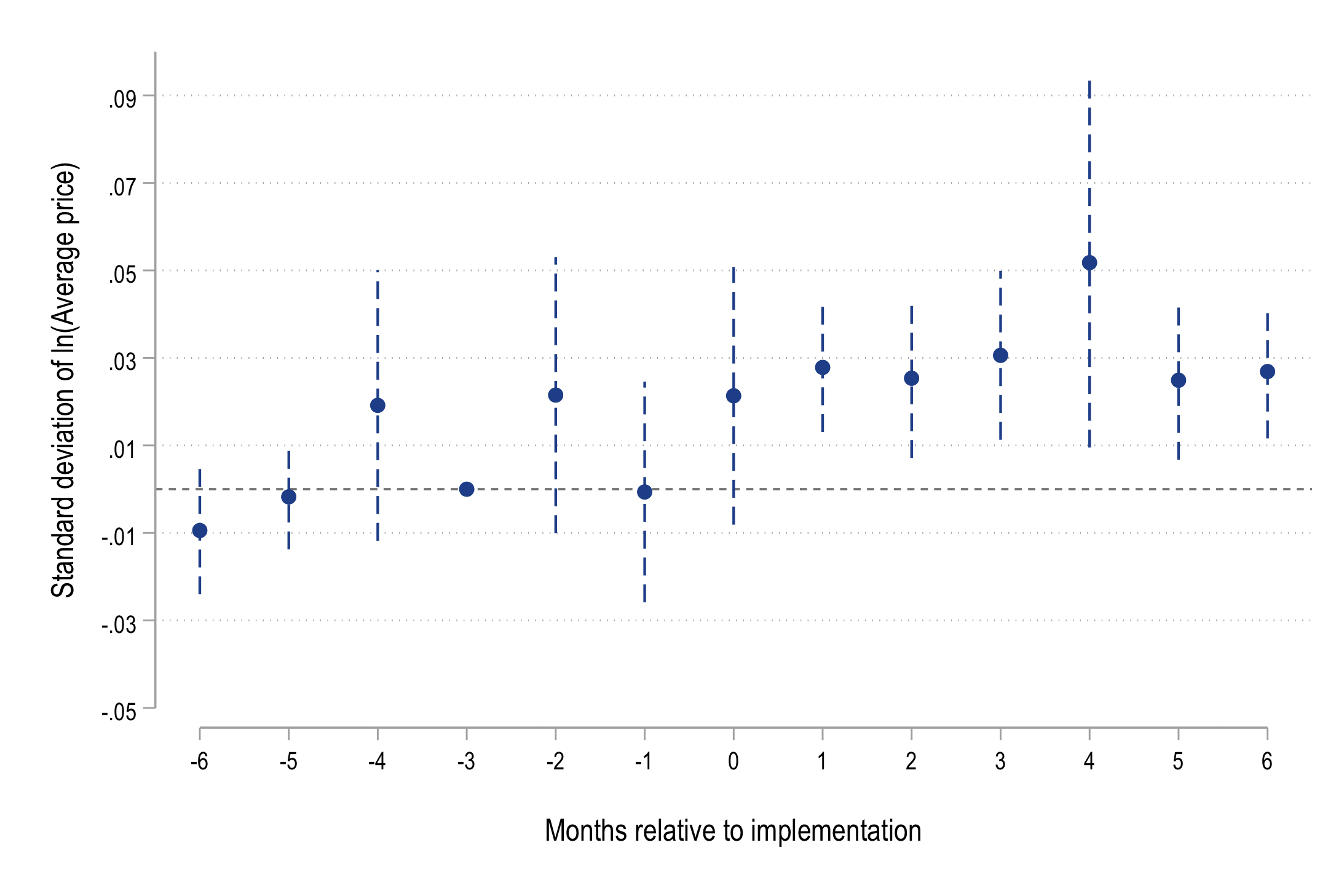
Price dispersion 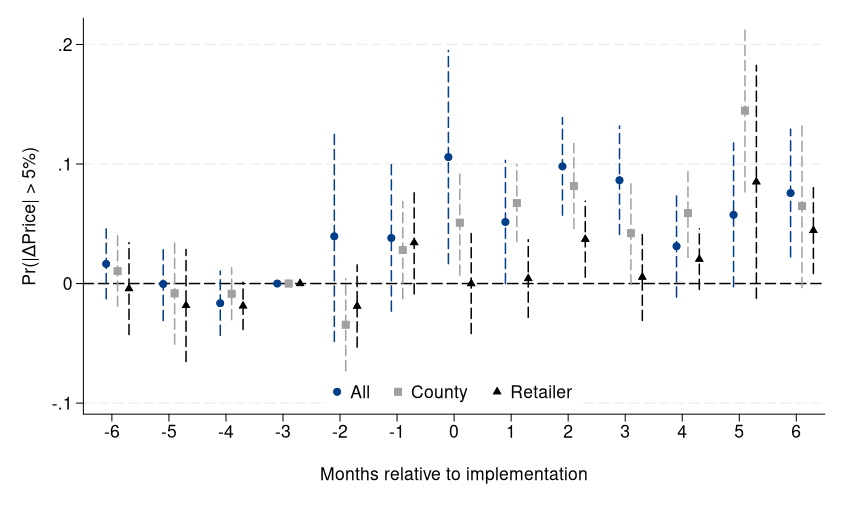
Repricing frequency 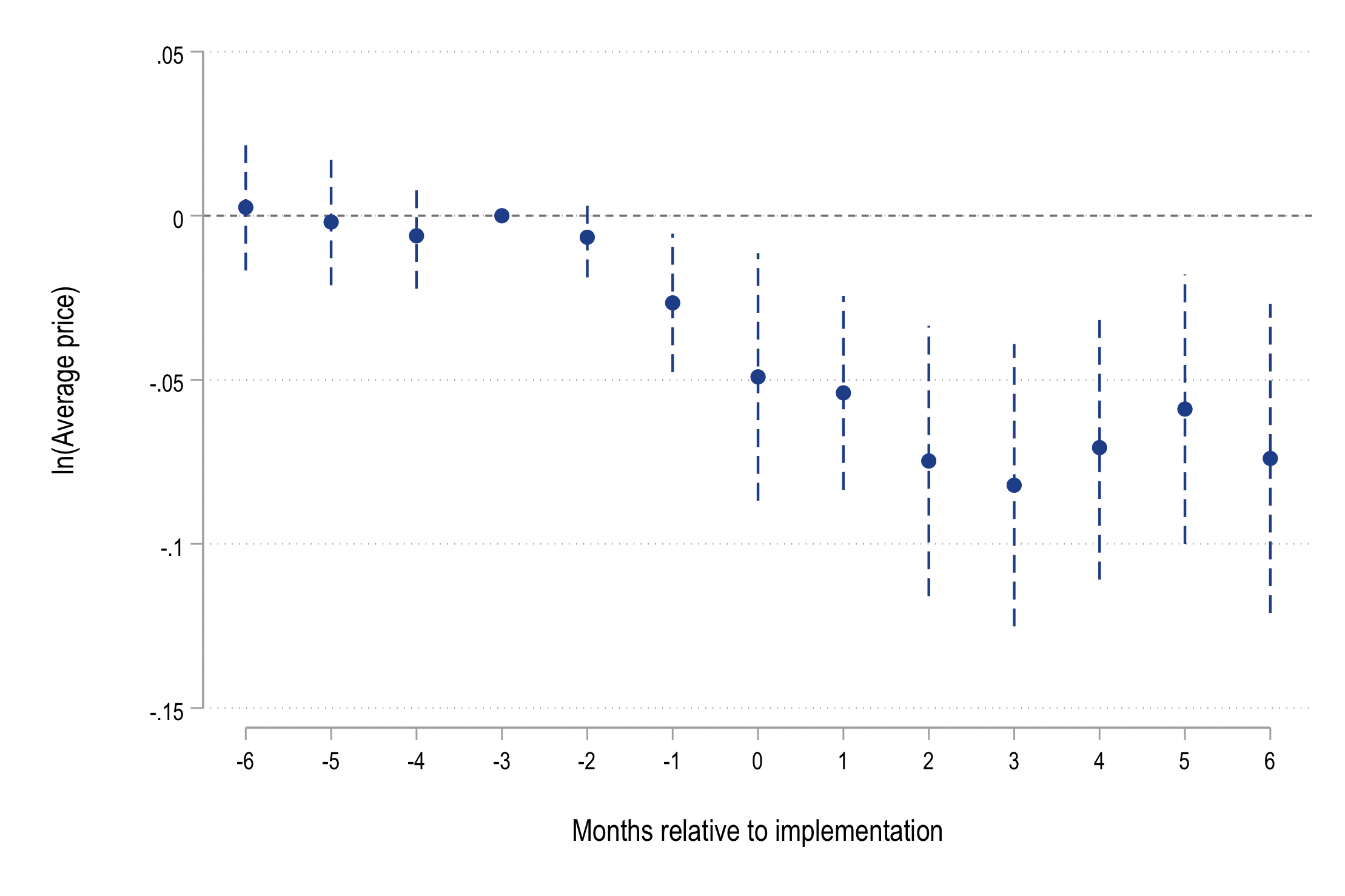
Price level -
Organization capital, large startups, and the dearth of IPOs
We show that startups relying heavily on organization capital to achieve scale through digital technologies are more likely to remain private and grow large rather than exit early via IPO or acquisition.
Abstract. Many startups in the 2000s have remained private after achieving large valuations, a pattern that funding availability alone cannot explain. We propose that startups relying heavily on organization capital to achieve economies of scale and network effects through digital technologies are more likely to become large private firms than exit earlier via an IPO or acquisition. Using LinkedIn data, we construct a novel measure of organization capital intensity for startups. Exploiting a legal shock that strengthened organization capital protection, we provide causal evidence that organization-capital-intensive startups are more likely to remain private and grow large rather than exit early.
-
Building Corporate Resilience to Supply Chain Disruptions
I examine how firms build resilience against supply chain disruptions to hard-to-replace inputs. Firms hold more inventory, less cash, and higher leverage, and update these policies after shocks that reveal new information about risk.
Abstract. I examine how exposure to disruption risk from hard-to-replace inputs affects corporate resilience investments and firms' learning about that risk. Using a new dataset on 11,000 foreign suppliers to U.S. manufacturers, I show that firms with fewer alternative suppliers hold more inventory and less cash, and have higher leverage. Exploiting natural disasters that disrupt suppliers, I find that firms update their beliefs about disruption risk and make persistent changes to corporate policies in response. Consistent with learning, the response is strongest after first-time shocks. Finally, firms with higher inventory buffers are better protected against performance losses when disruptions occur.
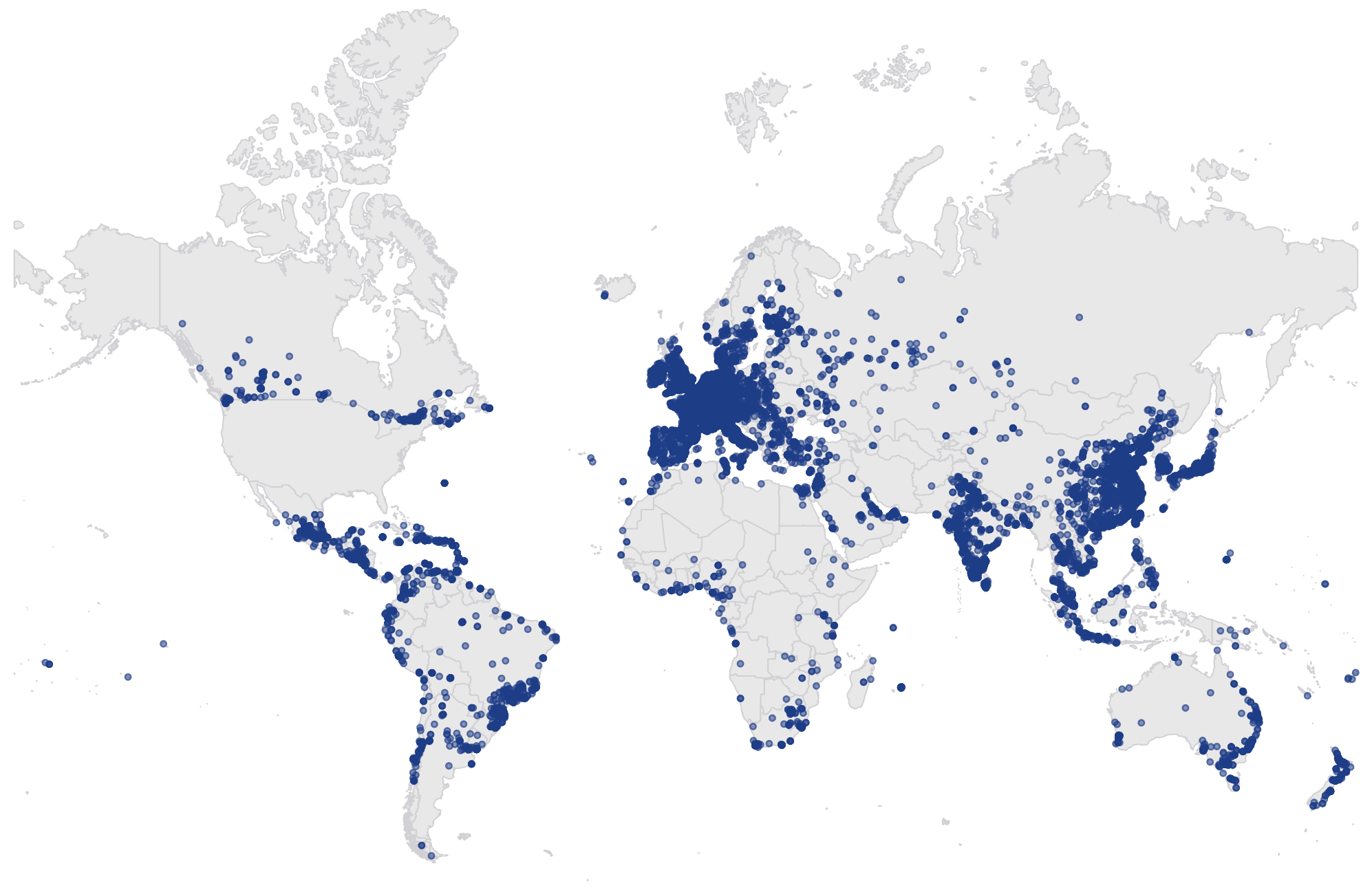
Supplier map 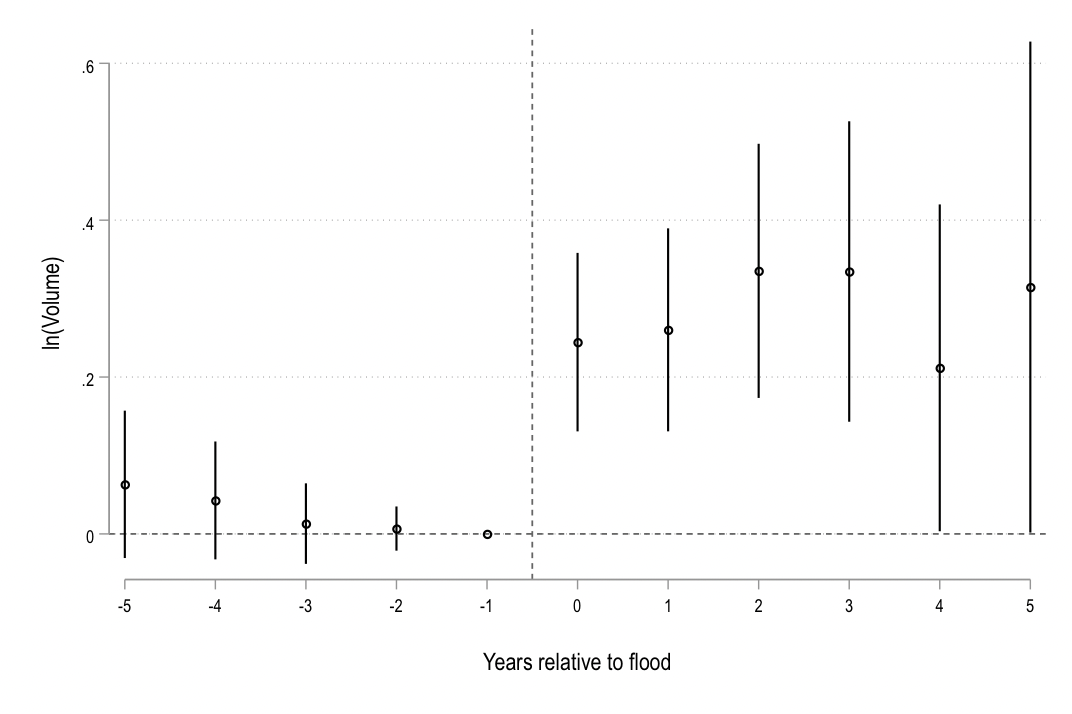
ln(Volume) 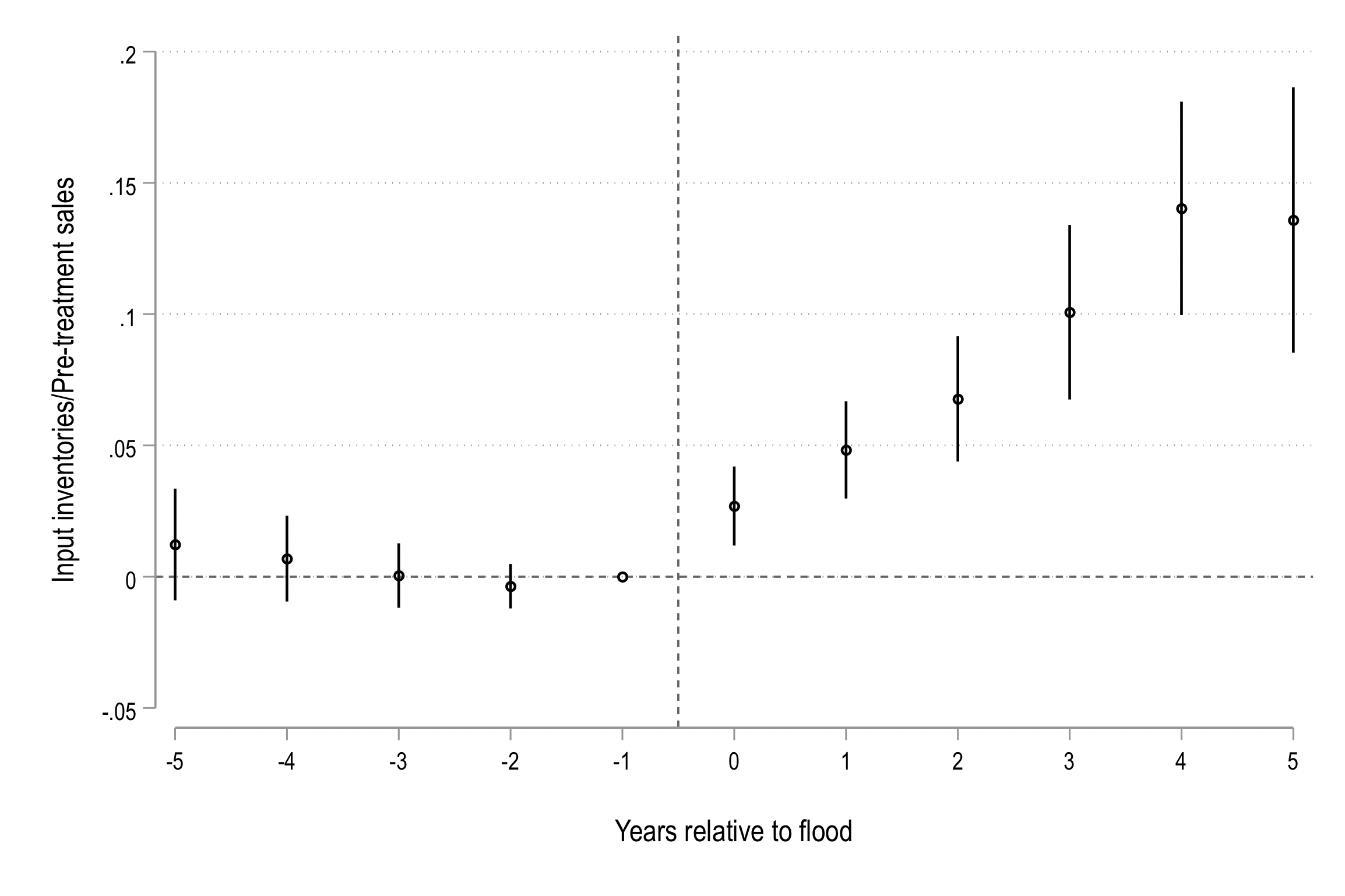
Inventories/Sales 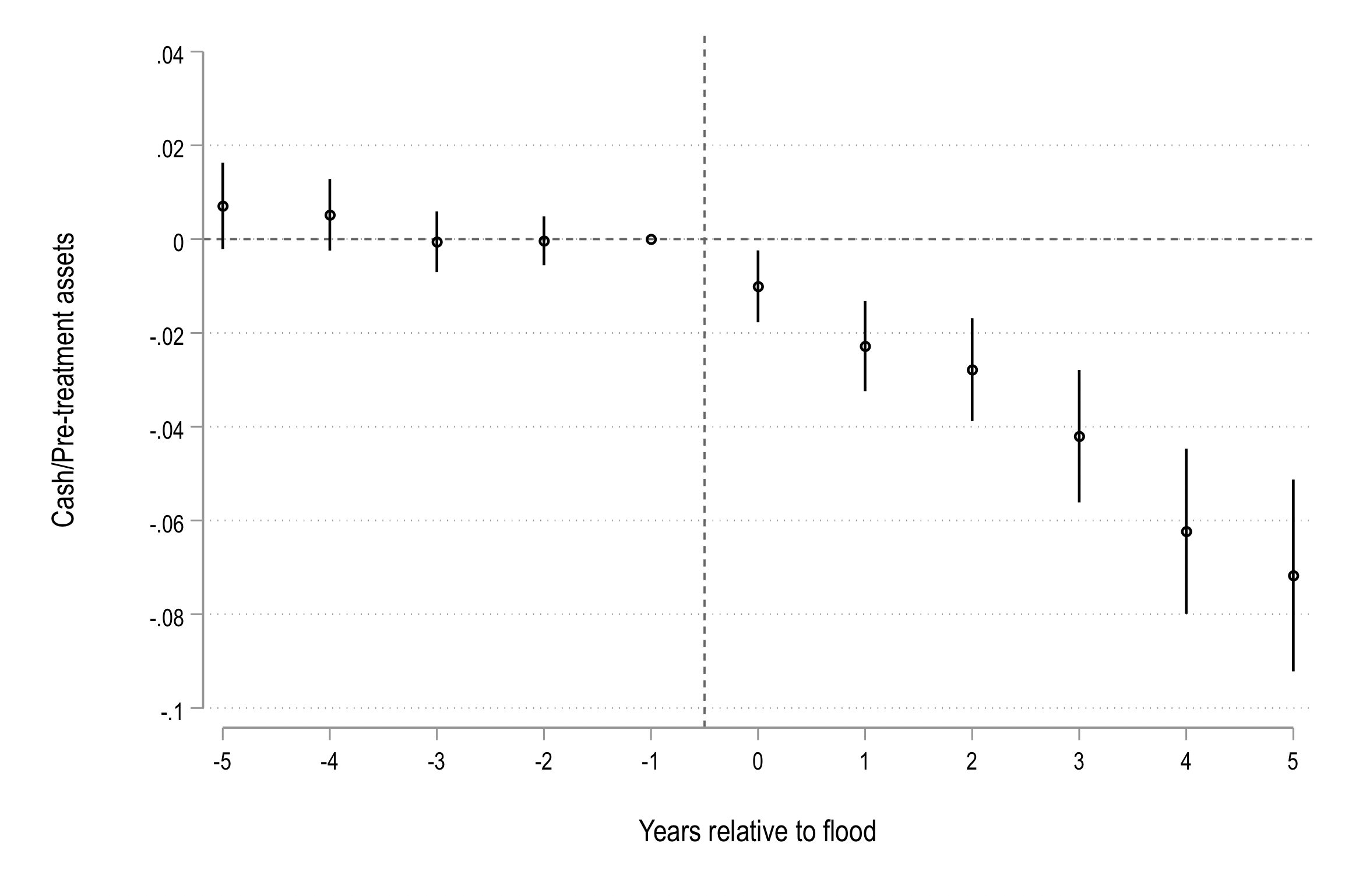
Cash/Assets 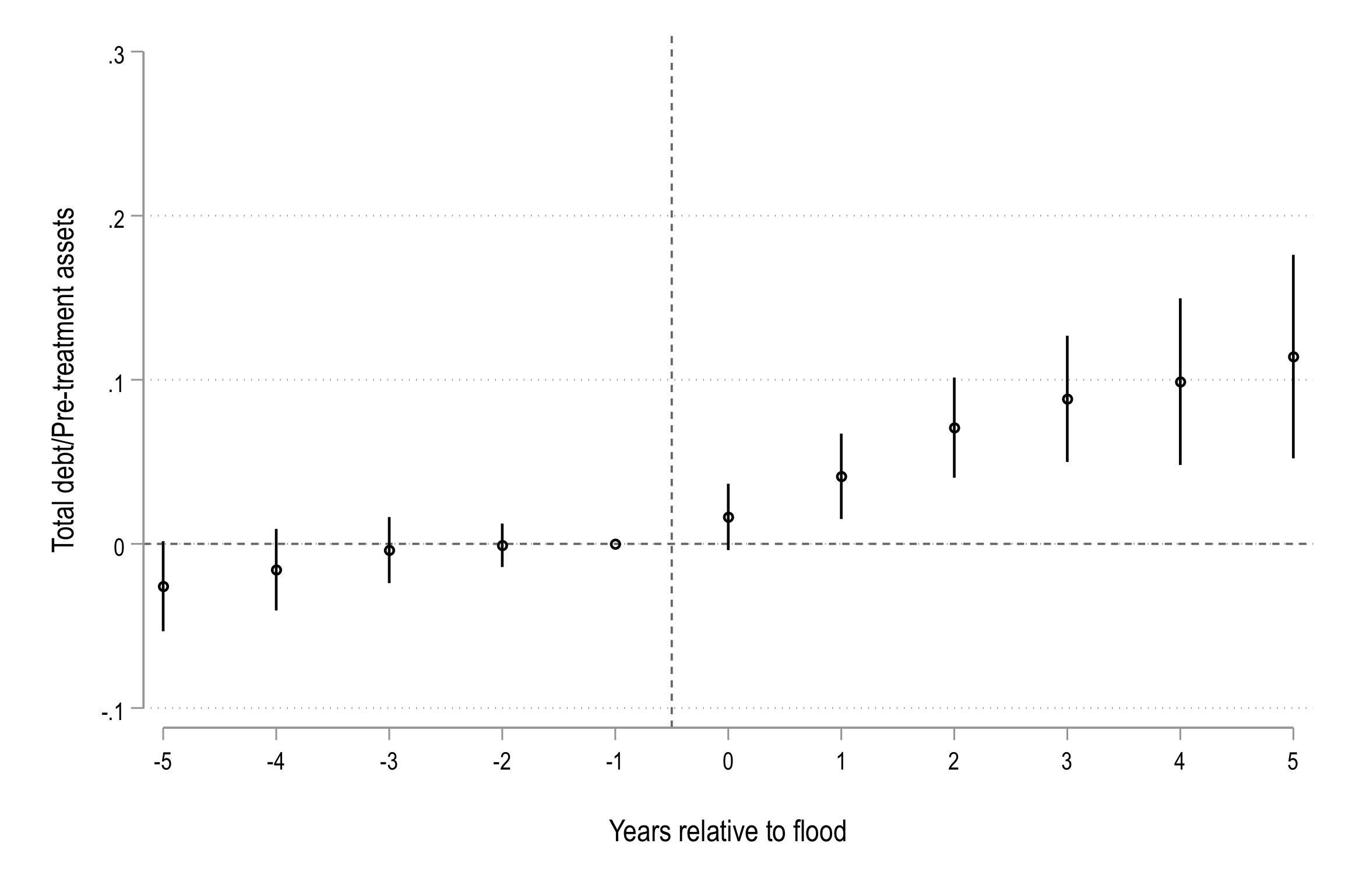
Debt/Assets
Registered reports
-
Global Financial Markets and Multinational Company Investment
Publications
-
Economic Policy Uncertainty and Multinational Companies
Abstract. We study the impact and propagation of economic policy uncertainty (EPU) via subsidiary networks of U.S. multinational corporations (MNCs). We find that increases in host-country EPU lead to significant decreases in MNC valuations. We document heterogeneous effects across important firm- and country-level dimensions such as intangible capital intensity, financial constraints, and country institutional quality. Higher EPU in host countries is associated with a decline in the growth of local MNC subsidiary assets and employment. We find no significant average spillover effects of host-country EPU on MNC subsidiaries in other countries and some evidence of negative spillover effects among vertically linked subsidiaries.
-
Unintended Real Effects of EDGAR: Evidence from Corporate Innovation
Abstract. We study the real effects on innovation of a transformative change in corporate disclosure dissemination, the implementation of the SEC's EDGAR system. On the one hand, increased disclosure dissemination can lower firms' cost of capital, thereby stimulating innovative activity. On the other hand, increased dissemination can exacerbate proprietary disclosure costs, reducing firms' incentives to innovate. We show that treated firms reduce innovation investment following EDGAR's implementation. In contrast, EDGAR reporting firms' innovation investment cuts are met with an increase in innovation investment by their technology rivals. Consistent with an increase in proprietary costs, EDGAR-filers disclose less about their innovation activities. We also find evidence of a redistribution of innovative activity from public to private firms not subject to EDGAR disclosure requirements.
-
Global Banks and Systemic Risk: The Dark Side of Country Financial Connectedness
Abstract. We study the relation between country financial connectedness and systemic risk for U.S. banking organizations with global exposures. Using supervisory data on U.S. banks' foreign claims, we find that banks with exposure to countries with globally connected financial markets contribute more to U.S. systemic risk. These adverse effects are amplified by systemically important and less capitalized banking organizations. Consistent with the idea that financial connectedness is a conduit for risk transmission, risk spillovers to the U.S. from foreign financial crises are magnified when the countries in crisis are well financially connected.
-
Foreign Investment, Regulatory Arbitrage, and the Risk of U.S. Banking Organizations
Abstract. This study investigates the implications of cross-country differences in banking regulation and supervision for the international subsidiary locations and risk of U.S. bank holding companies (BHCs). We find that BHCs are more likely to operate subsidiaries in countries with weaker regulation and supervision and that such location decisions are associated with elevated BHC risk and higher contribution to systemic risk. The quality of BHCs' internal controls and risk management plays an important role in these location choices and risk outcomes.
-
Property Rights Institutions, Foreign Investment, and the Valuation of Multinational Firms
Abstract. We study the effect of property rights institutions in host countries, the institutions protecting investors from expropriation by host country agents, on the geographic structure and valuation of US multinational corporations (MNCs). We provide firm-level evidence that better property rights attract investment from MNCs. We disentangle the effects of the Stulz (2005) "twin agency problems" in the context of foreign direct investment and show that our results are not driven by legal institutions protecting investors from expropriation by corporate insiders. Further, we show that changes in the quality of property rights in locations where MNCs operate have material impact on MNCs' valuations.